Formula SAE Steering Wheel
Ergonomic Design, Structural Analysis & Prototyping
Project Overview
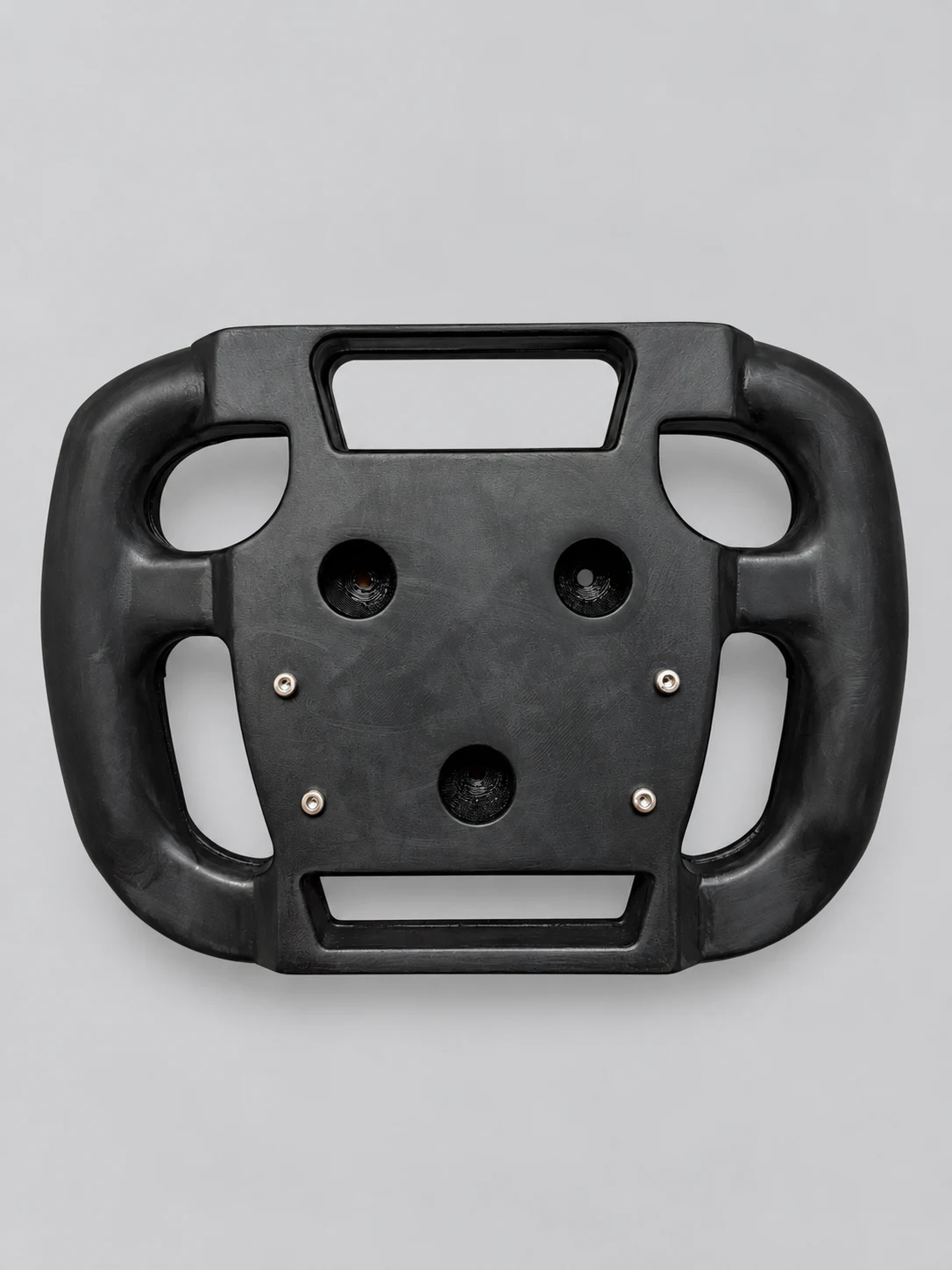
This project focuses on the development and structural evaluation of a custom steering wheel for a Formula SAE race car.
The design process incorporates ergonomic considerations, CAD modeling, material evaluation, load-case development, and finite element analysis to assess structural performance under demanding driver inputs.
The objective is to develop a lightweight, cost-conscious steering wheel while maintaining sufficient structural strength and practical driver ergonomics.
Design & Development
Establishing steering wheel geometry and driver ergonomics.
Developing and refining the CAD model.
Identifying critical steering and frontal loading conditions.
Evaluating material and manufacturing options.
Performing structural simulations.
Using simulation findings to guide design decisions.
The workflow is iterative rather than linear: analysis findings feed back into the geometry and material decisions, so the design continues to be refined instead of representing a finished commercial product.
Structural Load Case 1 — Frontal Loading
This loading condition represents a driver pushing or bracing against the steering wheel. The load is applied perpendicular to the wheel and is split equally between the two grips.
Reference: Yale Formula SAE Steering Wheel Design Project.
Structural Load Case 2 — Steering Torque
Opposing tangential forces are applied at the two grips, with the effective grip radius measured from the steering axis.
The selected design torque sits above the reference range of 100–135 N·m, providing a conservative loading condition for evaluating steering wheel strength.
F = T / (2r)
F = 200 / (2 × 0.105)
F ≈ 952 N per grip
Reference: Steven Fox, Cockpit Control Forces: How Robust Do Driver Controls Really Need to Be? (2010).
Material Selection & Cost Analysis
| Material | Thickness | Estimated Cost |
|---|---|---|
| 7075-T6 Aluminum | 3.2 mm | $57.73 |
| Carbon Fiber | 4.0 mm | $290.16 |
The aluminum alloy and carbon fiber options were compared in terms of cost, weight, manufacturability, and structural performance.
Quoted costs are preliminary material and manufacturing estimates from the design presentation, not final production costs. No final material has been confirmed at this stage.
Finite Element Analysis
Structural simulation is used to investigate stress distribution, potential high-stress regions, and deformation under the specified load cases. Results are reviewed against the CAD model so that geometry and material decisions can be refined iteratively.
Engineering Considerations
Each tradeoff is weighed against the load cases above, applying engineering analysis to a real Formula SAE design problem rather than a theoretical exercise.
Project Gallery
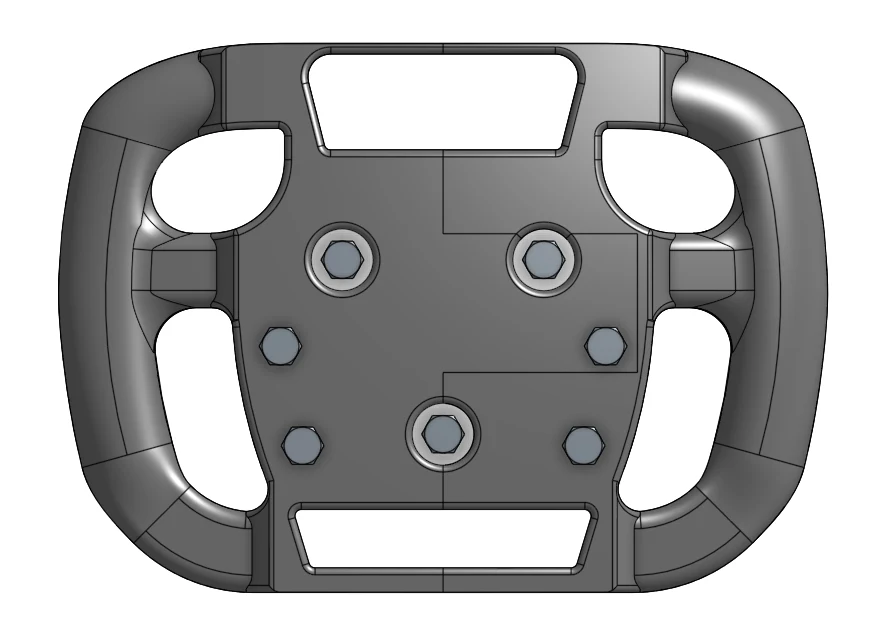
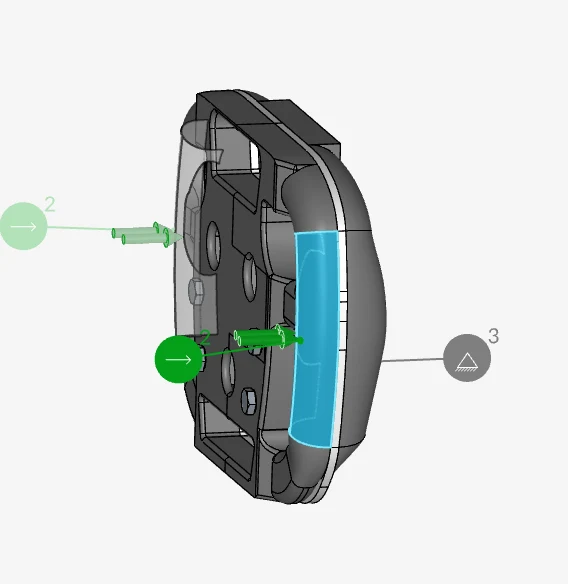
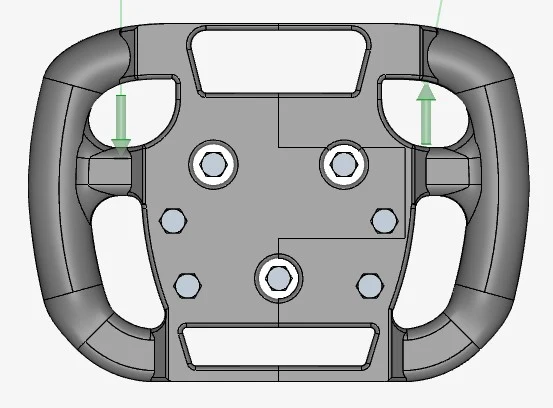
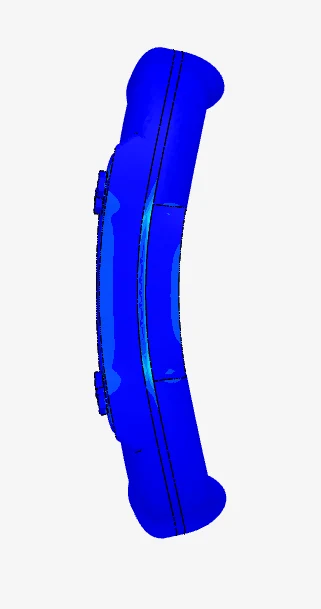
Additional photographs, CAD screenshots, FEA plots, and engineering charts are added here as they become available.
References
- —Yale Formula SAE — Steering Wheel Design Project
- —Steven Fox (2010), Cockpit Control Forces: How Robust Do Driver Controls Really Need to Be?